
HISTORIC
Windy Station
AGRICULTURE
A legacy of Australian
Since 1833, Windy Station has been an integral part of Australia's agricultural story. From its beginnings as part of the Australian Agricultural Company to its present-day operations, Windy Station embodies nearly two centuries of rural innovation, challenges, and triumphs.
Chapter 1: Indigenous Heritage and Early Settlement
date unknown -1894
The land now known as Windy Station holds deep Indigenous heritage, with the name derived from "Woondee," meaning "a place of many watering holes" in the local Aboriginal language. This fertile country on the Liverpool Plains provided abundant resources for Traditional Owners for thousands of years before European settlement.
The Warrah Estate was formally established in 1833 when the Australian Agricultural Company acquired the land, initially managed by William Telfer. The first sheep arrived as 700 pure Saxon Merinos relocated from the Port Stephens Estate, though these were quickly moved north to more suitable conditions at the company's Peel Estate. For much of the early period, West Warrah (including present-day Windy Station) was leased to other operators while the company focused on coal mining interests.
Serious pastoral development began in the 1850s with investment in wells, troughs, and fencing infrastructure. The 1860s marked significant expansion under manager Samuel Craik and General Superintendent E.C. Merewether, who divided the estate into East Warrah (122,600 acres) and West Warrah/Windy (127,000 acres). By the 1870s, operations had grown substantially under the long-term management of George Fairbairn, who arrived in 1870 and would oversee the property for four decades. The estate became renowned for Beef Shorthorn cattle and Merino sheep, with many Queensland and Northern Territory properties sourcing foundation stock from Warrah. This period culminated in the dramatic 1894 shearers' strike, when union workers camped at station boundaries in an unsuccessful attempt to force acceptance of new working conditions.
Chapter 2: The Australian Agricultural Company
1824 - 1997
The story of Windy Station begins with the formation of the Australian Agricultural Company (AACo) in 1824 under an act of the British Parliament. Commissioner Bigge recommended private investment in wool production as crucial to the future of the Colony of NSW, leading to the company's establishment with one million pounds of working capital and a Crown Grant of one million acres.
After initially settling at Port Stephens, the company sought more suitable land for raising sheep. In 1831, on the advice of surveyor Henry Dangar, the company selected two large runs at Warrah Creek and Goonoo Goonoo. Finally in 1833, two grants of 240,000 acres (Warrah, which included Windy Station) and 360,000 acres (Goonoo Goonoo) were made to the AACo.
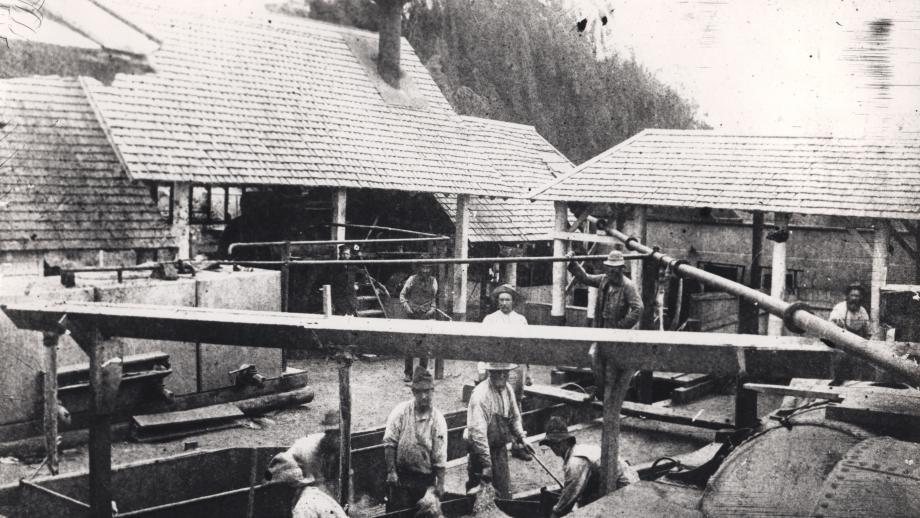
The 1850s marked a challenging period, but by the 1860s, operations expanded significantly at the Warrah holding. A woolshed at Warrah was built, and between 1870 and1890, substantial improvements to the land were undertaken. Flock sizes increased dramatically, with 92,413 sheep shorn in 1875 and 159,000 in 1896.
Chapter 3: Challenges & Innovation
1894 - 1920
The late 1800s brought significant challenges to Warrah Station operations. The 1894 shearers' strike tested management resolve when union workers camped at station boundaries, preventing non-union shearers from working. Manager George Fairbairn stood firm against the strikers, eventually breaking the strike when workers began signing the company agreement.
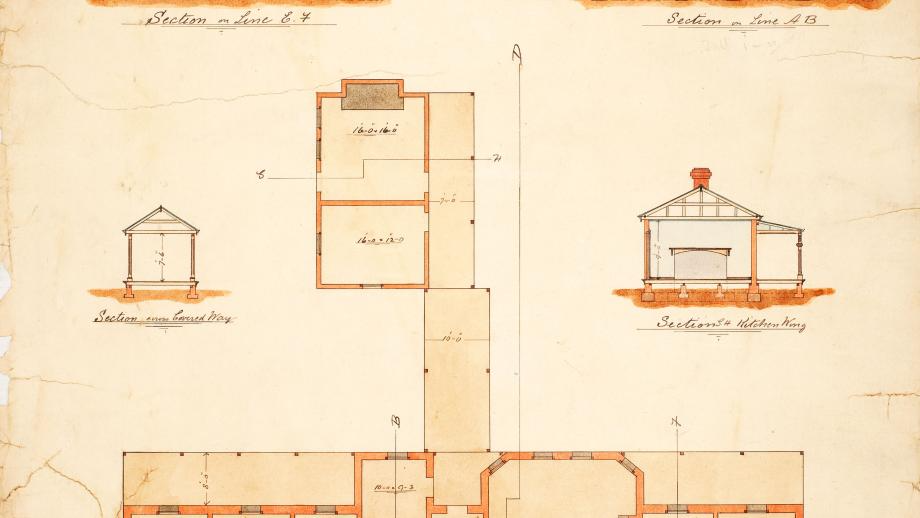
The period was marked by extreme weather events, including devastating heat waves in 1896 that made life "almost intolerable," followed by unprecedented snowfall that amazed local children who experienced snow for the first time. A tragic house fire in April 1896 destroyed the Warrah homestead and most belongings, prompting reconstruction with improved fire safety measures. The station faced pest challenges as the first rabbits appeared at Black Creek in 1896, leading to urgent rabbit-proof fencing construction.
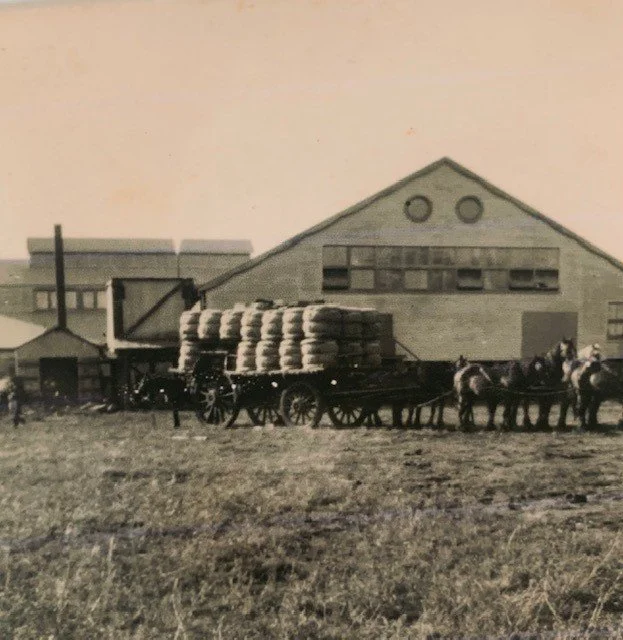
By 1901, the need for expanded shearing capacity resulted in construction of the new Windy Woolshed, designed by Fred Menkens and built by Thomas and William Cowan. This massive facility contained 44 stands and hydraulic pressing equipment, with an annual clip of 3,000-3,500 bales shipped via rail to Newcastle and then to London.
Chapter 4: Transition and Sale
1920 - 1997
The early 20th century saw continued agricultural development with the establishment of a Border Leicester stud in 1907, providing rams to other breeders across the region. However, government closer settlement policies posed increasing threats to large pastoral holdings. The AACo responded by subdividing portions of the estate, conducting auctions in 1908 and 1914 that sold town lots and farms totaling nearly 8,000 acres around Willow Tree. Resumption pressures intensified through the 1912, 1923, and post-World War II periods as the New South Wales Government acquired large areas for closer settlement. The gradual dissolution of the Warrah Estate accelerated in the 1960s, with the homestead portion (5,784 acres) sold in 1969, followed by 7,000 subdivided acres in 1967 and additional areas in 1972. After 165 years of continuous ownership by the Australian Agricultural Company, Windy Station, the last remaining portion of the original Warrah Estate was sold in 1996, marking the end of an era in Australian pastoral history.
Chapter 5: Romani Pastoral Company
1997 - present
In 1997, Windy Station was purchased by Romani Pastoral Company, owned by the Schwarzenbach family as part of their Australian agricultural portfolio spanning four properties. Under new ownership, the station maintained its core agricultural operations while embracing diversification opportunities. The early 2000s saw continued development of cropping and livestock enterprises across the 60,000-acre property.
A significant milestone occurred in 2017 when Romani Pastoral Company successfully applied to have the Windy Woolshed placed on the NSW State Heritage Register, recognising its architectural and cultural significance to Australian pastoral history. This heritage listing prompted extensive research and planning for the woolshed's conservation and adaptive reuse. The company developed a comprehensive masterplan in collaboration with heritage consultants, architects, and local trades to preserve the structure while preparing it for future community use.
In recent years, Windy Station has expanded into agritourism, offering farm stays in restored heritage buildings, educational tours, and hosting creative productions and events. The conservation pilot program for the woolshed officially commenced in 2025, marking the beginning of a new chapter that honors the past while ensuring the historic structure remains viable for future generations. Today, Windy Station continues as a working farm producing year-round crops and running beef cattle, while sharing its rich agricultural heritage with visitors and the broader community.



Explore more of Windy’s history
If you would like to discover more about the history of Windy Station and the Warrah Estate, you may like to visit the archives linked below.
Historical account of life at Warrah Estate
from England to Australia
Coming Soon